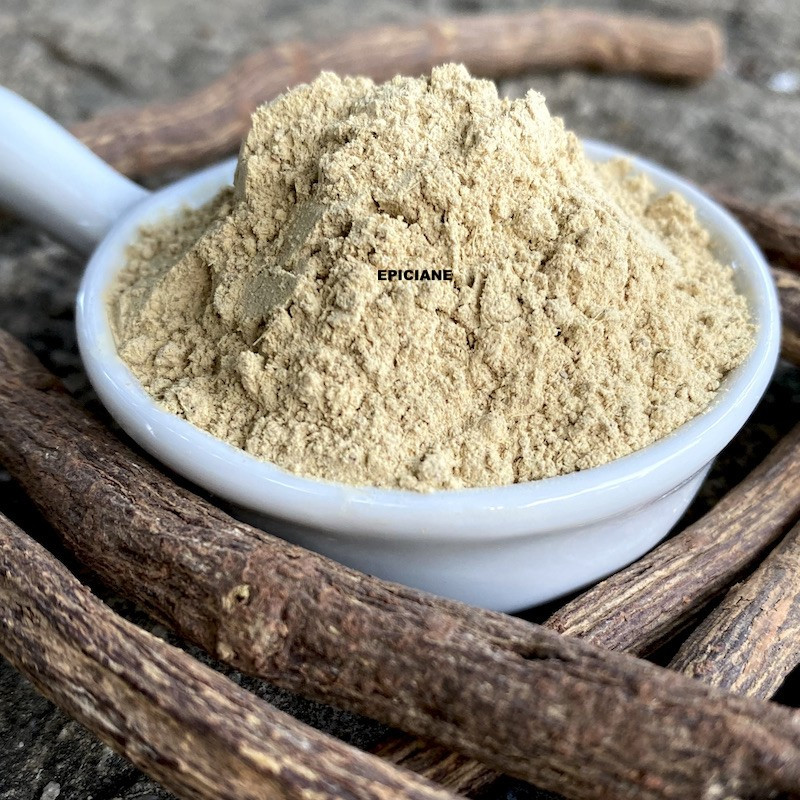
Réglisse en poudre
  • Réglisse en poudre

Licorice Powder

00022475-0001

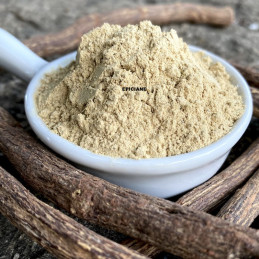
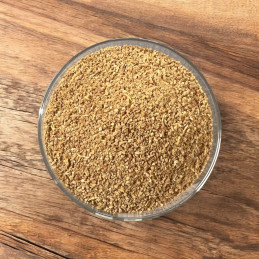
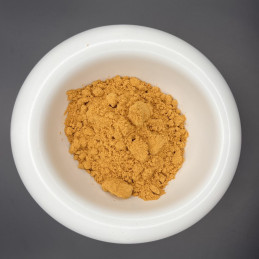
The taste of licorice wood ground into powder is a beautiful harmony between sweetness and a subtle bitterness.

This powder will be delicious in pastries, ice creams, and dessert creams.

Choix du poids
€3.50
Tax included
Quantity

>Get register and you will earn 4 points Get register and you will earn 4 points (Each €1.00 spent = 1 point).
Your cart will total 4 points.

Based on 1 review

Show reviews
  Delivery

Mondial Relay

  Returns

See conditions

  Payments

100% secure

Description
Produit livré en sachet refermable 

Séchage de la racine à l'air libre - Sans OGM - Sans ionisation - 

Uses in Cooking:


Here, we use what is known as "ratissée" licorice roots, meaning the bark has been removed before grinding into an extremely fine powder. This licorice powder has a particularly mild taste, without the pronounced bitterness of the bark, offering a delightful mix of sweetness with a marked sugary sensation.

Licorice powder pairs beautifully with vanilla, which softens its flavor even more, as well as with mint, honey, caramel, and even coconut. It's perfect for flavoring yogurts, ice creams, custards (like crème anglaise), biscuits, other pastries, and even some jams. You can mix it directly into your preparation, where it will instantly infuse flavor without leaving a trace.

Licorice root is also used in herbal medicine, confectionery, and beverage production. In fact, some still make a kind of pastis by macerating licorice and a few other spices in alcohol with added sugar. This drink is delicious and completely natural, although it should be consumed in moderation due to its alcohol content.

Licorice is also a true delight in infusions (chopped licorice is preferable for this), either on its own or added to tea, mint, or even medicinal herbal teas to enhance their flavor! You can also add it to the cooking juices of certain white meats like chicken or guinea fowl (in moderation) or even use it in jams like melon jam.

Many people chew licorice sticks, especially children, as well as those trying to quit smoking, often without realizing they're benefiting from its powerful medicinal properties! Chewing on licorice sticks, particularly in winter, can be a great protection against respiratory infections and winter viruses.

Licorice is tonic, digestive, and soothing for the throat. It is still recommended today for colds, bronchitis, and sore throats due to its expectorant and cough-suppressing properties. However, be cautious: some of its active compounds can raise blood pressure, cause edema, and lower potassium levels in the body. Excessive daily consumption of licorice or products containing it can lead to serious health issues, and it is strongly discouraged for people with high blood pressure.

Who am I?

Origin: Turkey

Scientific name: Glycyrrhiza glabra

Common names: Licorice, sweetwood, caliche (in Belgium), reegalisse

Licorice is a perennial herbaceous plant from the Fabaceae family, growing in bushes between 1m and 1.5m tall. Its aromatic roots, long rhizomes, are harvested for consumption. The plant has light green leaves similar to those of acacias and produces small blue to violet flowers in upright clusters. The fruit is a small, flat pod, 2 to 3 cm long, containing numerous seeds. Licorice originates from southern Europe, particularly around the Mediterranean.

Licorice thrives in rich, moist soils and warm climates, such as those found in its Mediterranean homeland, as well as in the southern U.S., the Middle East, and North Africa, where it has long been introduced. When it thrives, licorice can become very invasive—much like a weed—even after uprooting, as just one fragment of root left in the ground can sprout a new plant!

The name "licorice" is used for both the plant and its roots. For the roots, both masculine and feminine forms are used interchangeably, while the plant itself is always referred to in the feminine form.

A Little History:

Licorice was already known to the ancient Greeks and Romans, who used it to clear the voice. It is also said that the Pharaohs appreciated it as well.

In the 13th century in Montpellier, a small candy called "grisette" was created by combining licorice and honey. Around this time, licorice began to be cultivated around the Mediterranean, whereas it had previously only been wild. Later, it was mixed with roasted couch grass root to prepare a drink known as "hospitalière," which was often found on hospital bedside tables.

In the 15th century, after Jacques Coeur brought gum arabic from the Orient, leading to the invention of chewing gum, licorice began flavoring these confections, which would later be called bonbons.

By the 18th century, the "coco" trend emerged in Paris—a drink made from licorice macerated in lemon water. It was sold throughout Paris, even on the streets. Around the same time, people were consuming "cachous," a mix of licorice and areca nut, a mild stimulant.

Finally, it is said that Napoleon Bonaparte became addicted to licorice after consuming it excessively, as it helped alleviate his gastric problems.

Product Details
00022475-0001
0

Data sheet

Best before date
It appears on every product. This best before date (BBD) is more than one year away. It indicates the period during which the product will maintain optimal quality. However, exceeding this date will have no impact on your health.
Storage of plants
They should be stored in a dry place, in tightly sealed individual containers, away from light, even artificial.
BBD (Best Before Date)
09/2025
Emplacement entrepôt
E15
Possible allergens
This product may contain traces of sesame, mustard, celery, and gluten.
Licorice Powder
Reviews about this product
Logo Société des Avis Garantis Show attestation

Reviews subject to control

0
1★
0
2★
0
3★
0
4★
1
5★
10/10


Based on 1 review

  • 5

    Pas encore ouvert


Customer reviews

Licorice Powder
Reviews about this product
Logo Société des Avis Garantis Show attestation

Reviews subject to control

0
1★
0
2★
0
3★
0
4★
1
5★
10/10


Based on 1 review

  • 5

    Pas encore ouvert


You might also like

Reference: 108017302

Licorice Sticks

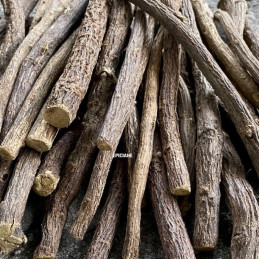
With the taste of licorice, both sweet and slightly bitter, it brings back all the memories of childhood! You can chew it for fun or infuse it to prepare delicious drinks.
Price €4.00
More
Out-of-Stock

Reference: 7N7525705

Chopped Licorice

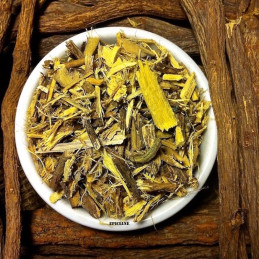
Its enveloping and persistent taste is both mildly bitter and sweet at the same time. You can infuse it to flavor beverages, ice creams, and pastries.
Price €3.20
More
Out-of-Stock
16 other products in the same category:

Reference: camomilleRom

Roman Chamomile (Flowers)

The virtues of these flowers are numerous, and their bitterness is appreciated by many. With them, you can make calming and digestive teas, as well as soothing lotions for the eyes and hair. They are also delightful in certain alcoholic beverages!
Price €5.80
In stock

Reference: cardamomeM

Ground Cardamom

Its fragrance is extraordinary and powerful, somewhere between licorice and eucalyptus, with a more lemony note. It works wonders in flavoring gingerbread, Indian curries, rice, and many other dishes. However, for alcoholic beverages, tea, coffee, and other liquids, it’s better to use whole seeds.
Price €7.50
In stock

Reference: fevetonka

Tonka Bean

The aroma of this large black seed is powerful and truly unforgettable, blending notes of vanilla and spice! Grated or infused, it’s delightful for flavoring chocolate and custards, as well as enhancing scallops and even certain meats.
Price €5.40
In stock

Reference: 10M6821604

Shelled Green Cardamom Seeds

Its flavor is powerful and unique, somewhere between licorice and eucalyptus, with a more lemony note. Equally suited to both savory and sweet dishes, it adds a real delight to tea, coffee, gingerbread, Indian curries, rice, and even alcoholic drinks. You can even mix it with your pepper in your grinder!
Price €4.90
More
Out-of-Stock

Reference: 9N7669901

Red Cinchona Bark

This bark, full of beneficial properties, is used in aperitifs both for its delightful bitterness and its medicinal virtues. Tonic and bitter, cinchona stimulates appetite, reduces fever, and when used in lotions, strengthens your hair.
Price €2.50
In stock

Reference: ecorcecitronH

Chopped Lemon Peel

This is dried lemon peel chopped into pieces of approximately 0.3 to 1 cm. You'll experience the familiar lemon flavor along with the slight bitterness of the peel. Perfect for your tea and infusions, spirits, baked goods, as well as sauces for fish, poultry, and other meats.
Price €3.70
In stock

Reference: 1N7004306

Peppermint Leaves

Its flavor is strong and very refreshing, similar to the chewing gum it often flavors. It’s wonderful in tea and infusions, but also delicious in tabbouleh and Asian dishes.
Price €3.10
More
Out-of-Stock

Reference: gentiane

Gentian Roots

Its bitterness is pronounced, which is exactly why it's so sought after! With it, you can prepare spirits, aperitifs, and invigorating herbal teas, as it is full of beneficial properties.
Price €5.00
In stock

Reference: 108017302

Licorice Sticks

With the taste of licorice, both sweet and slightly bitter, it brings back all the memories of childhood! You can chew it for fun or infuse it to prepare delicious drinks.
Price €4.00
More
Out-of-Stock

Unroasted Criollo Cacao

Unroasted Criollo cacao, with its intense and natural taste, reveals unique aromas to enrich your raw desserts, chocolate drinks, and gourmet dishes. An authentic experience of pure and refined cacao.
Price €3.20
More
Out-of-Stock

Reference: speculos

Speculoos (Blend)

This warm blend of cinnamon and spices evokes the comforting aroma of a steaming coffee on beautiful late afternoons. It was specially created for the biscuit known as "speculoos," but it will also wonderfully flavor other cookie doughs (such as sponge cakes), compotes, and cooked fruits.
Price €2.20
In stock