Yellow Mustard

208037909

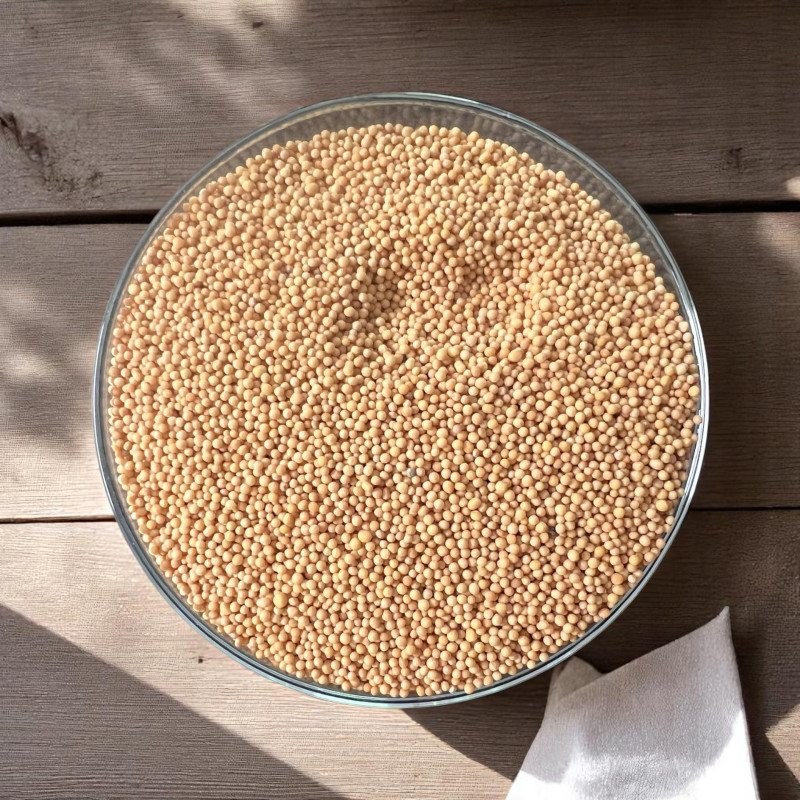
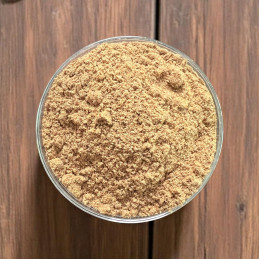
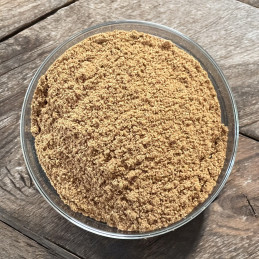
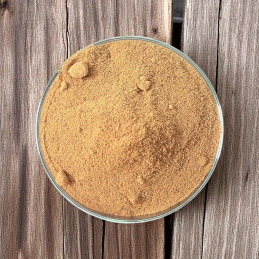
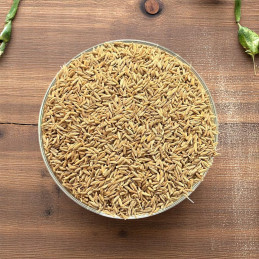
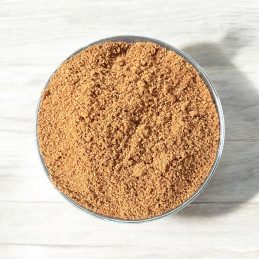
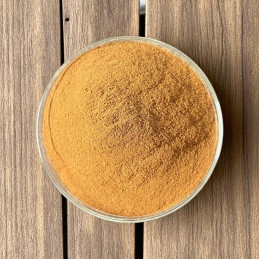
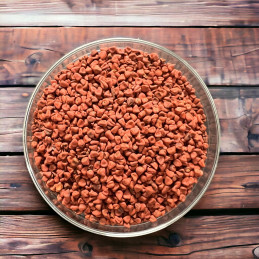
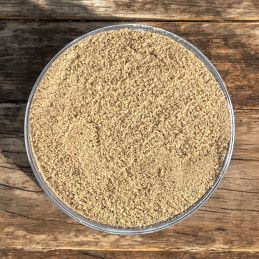
Offered in seeds or powder form.
As whole seeds, its taste is distinctly "mustardy."

Use it to flavor meats, sauces, and to make homemade mustard.

Choix du poids
État
€1.20
Tax included
Quantity

Get register and you will earn 1 point Get register and you will earn 1 point (Each €1.00 spent = 1 point).
Your cart will total 1 point.

Based on 3 reviews

Show reviews
  Delivery

Mondial Relay

  Returns

See conditions

  Payments

100% secure

Description
Livré en sachet refermable 

- Sans OGM - Sans ionisation - 

Pour info, 200g de graines de moutarde ont un volume de 25cl (1/4 de litre) environ

Culinary Uses:

Recipe to Make Your Own Mustard

Ingredients:

  • 100g of mustard seeds or powder (a mix of yellow and black seeds works best for me).
  • 8 tablespoons of dry white wine or spring water.
  • 6 tablespoons of white wine vinegar.
  • 1 teaspoon of coarse salt.

Finely grind the seeds (or choose mustard powder), then use a whisk to blend the powder with white wine, vinegar, and salt. After a few minutes, as the mixture thickens, pour it into a glass jar and let it rest in a cool place for a few days. Your mustard is ready!

You can flavor it to your taste by adding tarragon, honey, etc.

Yellow mustard seeds are much milder and less bitter than their black mustard cousins. They add flavor to pickles, sauerkraut, and pickled vegetables. They’re also delicious in sautéed potatoes, added to the oil at the start of cooking. You can also add them to the juices of a roast pork or beef while cooking, where they swell and release their aroma.

Mustard is probably the most widely used condiment globally. The city of Dijon has made it a specialty. This condiment is often flavored in various ways with vinegar, wine, honey, beer, maple syrup, tarragon, lavender, etc. It can be generously spread on meats (such as roast pork or rabbit) before cooking, enhancing the flavor and helping retain the meat's juices. It’s also added to salad dressings, mayonnaise, and remoulades.

You can make your own mustard by crushing the seeds more or less, or by choosing mustard that’s already ground into powder (also called mustard flour), to which you add vinegar and flavor with tarragon, for example, or honey, which makes it milder. The best is to mix yellow and black mustard; the first adds a mild, slightly floral taste, while the second adds strength and bitterness. This is, in fact, the Dijon method, with a few additional secrets. The traditional mustard recipe involved letting the seeds soak for several weeks in salted water for fermentation, then grinding them.

Lastly, you can sprout the seeds in a germinator, for example, to obtain crunchy, juicy sprouts to add to a salad or sandwich.

The fresh leaves of the mustard plant are also edible, rich in vitamins (C, A, and K) and minerals (notably manganese and calcium), whether eaten in salads or cooked like cabbage.

Who Am I?

Origin: India
Scientific name: Sinapis alba
Common names: Senvy, sanve

Both the leaves and seeds of the mustard plant are edible. Mustard belongs to the cruciferous family, like cauliflower. The varieties include yellow or white mustard (as featured here), brown mustard, and black mustard. Canada is the world’s largest producer.

The yellow color of the condiment (in a jar of mustard) does not come from the seeds themselves, which are quite pale inside, but from added turmeric!

Since ancient times, mustard has also been used for its medicinal properties, particularly as a poultice made from ground seeds (or mustard flour), to treat colds, respiratory ailments, and sore joints. The seeds were also used for food preservation.

This plant, often considered a “weed” due to its hardiness, is also incredibly useful. Its roots loosen compacted soils, promoting the growth of subsequent plants like wheat and barley. It also serves as green manure in organic farming, interrupting disease cycles in cereal crops. Finally, mustard flowers attract bees, which produce a delicious honey from their nectar, for which California is especially famous!

A Bit of History:

The term "mustard" appeared in the French language at the beginning of the 13th century, derived from "must," referring to the practice at the time of grinding mustard seeds with grape must to soften their pungency.

It’s thought that prehistoric humans chewed mustard seeds along with meat! This very old habit of consuming mustard with meat likely took hold to mask the unpleasant taste of aged meat, which was common in ancient times.

Yellow mustard originated from the Mediterranean basin and Crimea and has been introduced to many parts of the world, where it has now become naturalized. It has been cultivated since at least ancient Greek times, and as early as the Roman era, it was prepared much like it is today.

The term “moutardelle” refers to horseradish, which is very similar in taste and uses.

Product Details
208037909
0

Data sheet

Best before date
It appears on every product. This best before date (BBD) is more than one year away. It indicates the period during which the product will maintain optimal quality. However, exceeding this date will have no impact on your health.
Storage of spices
Store them in a dry place, in tightly closed individual containers, away from light, even artificial.
BBD (Best Before Date)
07/2025
Emplacement entrepôt
FL41
Possible allergens
Ce produit peut contenir des traces de sésame, céleri et gluten
Yellow Mustard
Reviews about this product
Logo Société des Avis Garantis Show attestation

Reviews subject to control

0
1★
0
2★
0
3★
0
4★
3
5★
10/10


Based on 3 reviews

  • 5

    Excellent

  • 5

    Bien

  • 5

    RAS


Customer reviews

Yellow Mustard
Reviews about this product
Logo Société des Avis Garantis Show attestation

Reviews subject to control

0
1★
0
2★
0
3★
0
4★
3
5★
10/10


Based on 3 reviews

  • 5

    Excellent

  • 5

    Bien

  • 5

    RAS


You might also like

Reference: 208037910

Black Mustard

Offered in whole seeds or powder. Its taste is distinctly "mustardy," with a sharp pungency and a hint of bitterness. It is widely used in Indian cuisine, sauces, meats, pickles, and is also ideal for making mustard.
Price €1.30
In stock

Reference: cuillèremoutardebuis

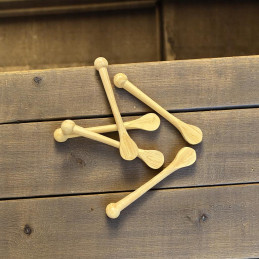
Boxwood mustard spoon

Flat mini boxwood spoon, made in France with French wood, which will be very useful for your mustard, spices, or salt.
Price €1.60
More
In stock
16 other products in the same category:

Reference: 00723801

Whole Nutmeg

Its distinctive flavor, both woody and exotic with hints of smoky notes, has become essential to Western cuisine. It is inseparable from gratins, purees, béchamel sauces, quiche lorraine, and even gingerbread.
Price €3.50
In stock

Reference: 00029083-0001

Ground Caraway

This fine powder is full of the fresh, minty flavor of the original seed. It’s easy to use in vegetable dishes and sauerkraut. It’s also commonly included in spice blends for couscous and tagines.
Price €1.50
In stock

Reference: 6L5609803

Annatto (Rocou)

This tiny, bright red seed, which is nearly flavorless, is used as a natural coloring agent in cooking to give a red or orange hue to certain cheeses, fish, oils, and more. It can also be used as a self-tanner on the skin.
Price €2.10
In stock

Reference: 30803202

Ground Cumin

Its rich and powerful aroma has made it famous worldwide. It is an essential ingredient in North African cuisine, perfectly pairing with vegetables (carrots, chickpeas, fava beans), cheeses, and meats (lamb).
Price €2.00
In stock

Reference: 1N6987004

Ground cloves

Its aroma is robust, woody, and powerful, reminiscent of forest undergrowth yet floral. Its flavor pairs particularly well with meats, pâtés, charcuterie, biscuits, gingerbread, and certain sauces.
Price €1.70
In stock

Reference: 20815801

Garlic Powder

In a fine, talc-like powder, it is convenient, easy to digest, and beautifully aromatic. Ideal for sauces, salads, vegetables, meats, compound butters, and countless culinary preparations.
Price €2.30
In stock

Reference: gingembreM

Ground ginger

The taste of this powdered root is spicy, peppery, and slightly lemony. It is delicious in fish dishes, pastries (such as gingerbread), and is essential in Asian, Indian, and North African cuisines.
Price €2.20
In stock

Reference: 8N7625101

Sicilian Sumac

Sa saveur acidulée et salée en même temps est très étonnante! Il parfume traditionnellement les poissons, les fruits de mer et même certaines viandes dans la cuisine libanaise. Mais surtout, il trompe le palais dans un régime pauvre en sel !
Price €2.80
In stock

Reference: gingembreE

Ginger roots

Ginger has a spicy, peppery, and slightly lemony taste. It is an essential ingredient in Asian, Indian, and North African cuisines, where it features in countless spice blends, and is also highly valued in teas and certain alcoholic beverages.
Price €2.30
In stock

Reference: Harissa

Harissa Powder

Discover an explosion of spicy flavors with our premium harissa powder! Made from a carefully selected blend of spices according to the traditional Tunisian recipe, our harissa powder adds a touch of heat and depth to any dish.
Price €2.40
In stock