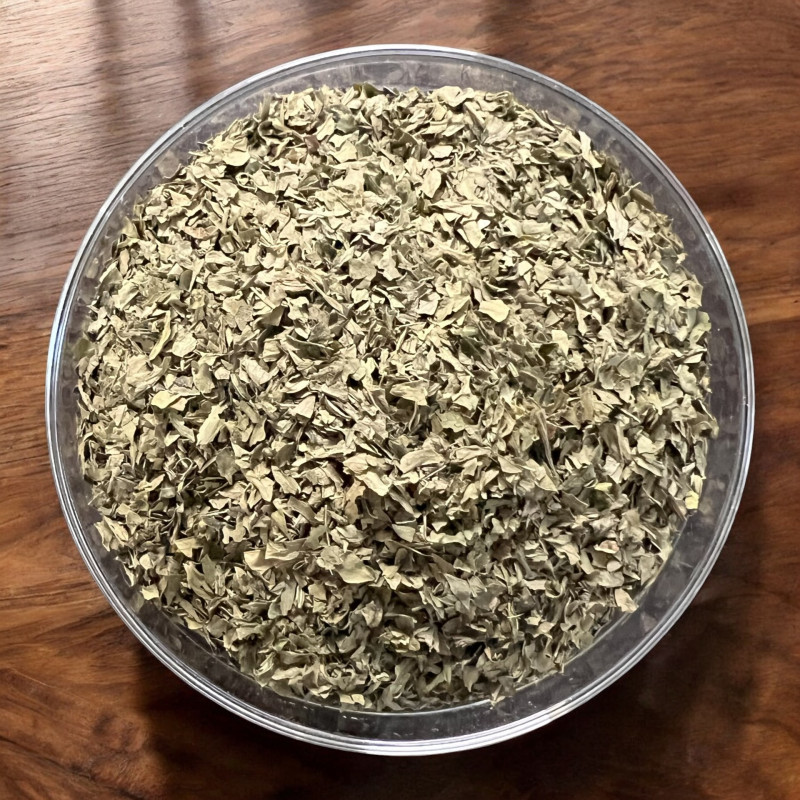
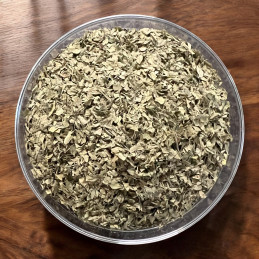
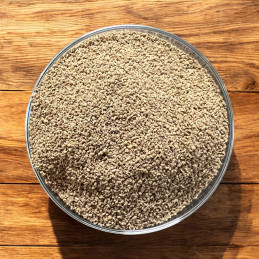
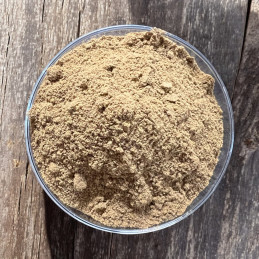
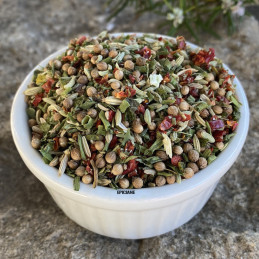
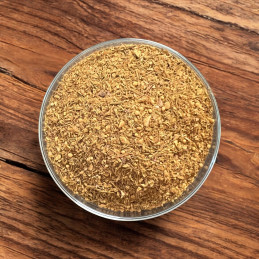
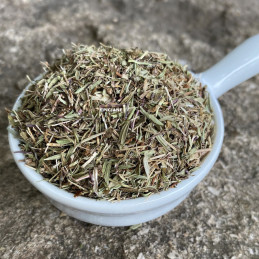
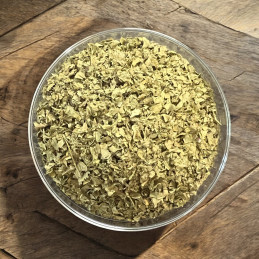
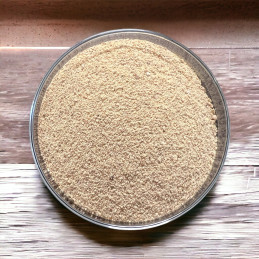
Product delivered in a resealable bag
- GMO-free - Non-ionized -
Uses in Cooking:
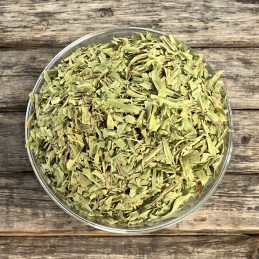
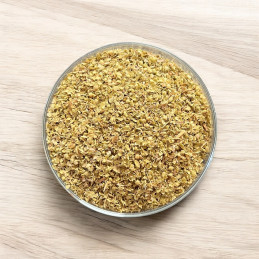
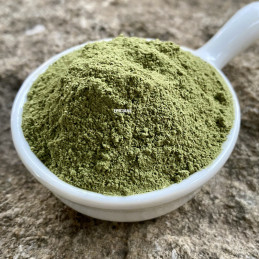
 Celery leaves are used to flavor soups, sauces, vegetables, stews, and pot-au-feu. Rehydrated with a touch of water, they work wonders in chicken salads and mixed salads (with chickpeas, onions, olives, tomatoes, and hard-boiled eggs). Just like fresh leaves, the dehydrated version can be used in broths for shellfish and fish, as well as in carrot and tomato juices. Their flavor, much stronger than that of parsley, truly resembles that of lovage.
For connoisseurs looking for lovage, particularly those from the East who are especially fond of it, this is literally its twin in taste.
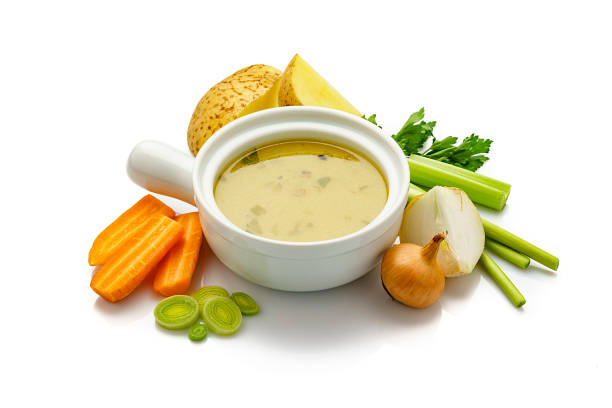
Who am I?
Origin: Poland
Scientific name: Apium graveolens
Common names: Marsh parsley, Marsh lovage, Scented celery, Italian celery
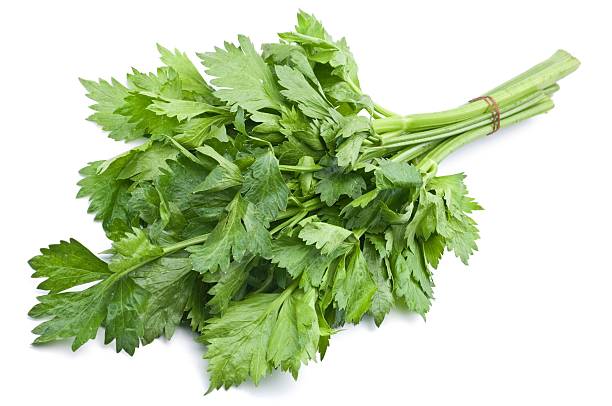 The dietary properties of celery are well-known, but it also has numerous medicinal virtues, which may be attributed to the presence of antioxidants in the plant. It also provides our body with a significant dietary source of lutein, an antioxidant from the carotenoid family.
Note that some individuals are allergic to celery.
Celery is a biennial herbaceous plant from the Apiaceae family, cultivated as a vegetable for its leaves and root, and for its seeds.
The white umbel flowers bloom from August to October.
In the wild, it grows in European meadows, especially in the Mediterranean basin, along streams, and in wet areas.
There are four main varieties within this species, three of which are commonly cultivated: Marsh parsley (var. Graveolens), Celery stalk (var. Dulce), Celeriac (var. Rapaceum), and Cutting celery (var. Secalinum).
A demanding and difficult plant to cultivate, celery prefers rich soils and requires a lot of water.
°°°
A Bit of History:
Celery was originally called "ache," a word derived from Latin, meaning "growing in water," in reference to the plant’s natural habitat.
The term "celery," which appeared only in 1651, was borrowed from an Italian dialect and is thought to derive from the Latin "selinon," a word for the plant originally in Greek.
500 years before our era, the Chinese were already using it in cooking. As for the Egyptians, they harvested its leaves, stalks, and seeds, which were already used as seasoning.
***