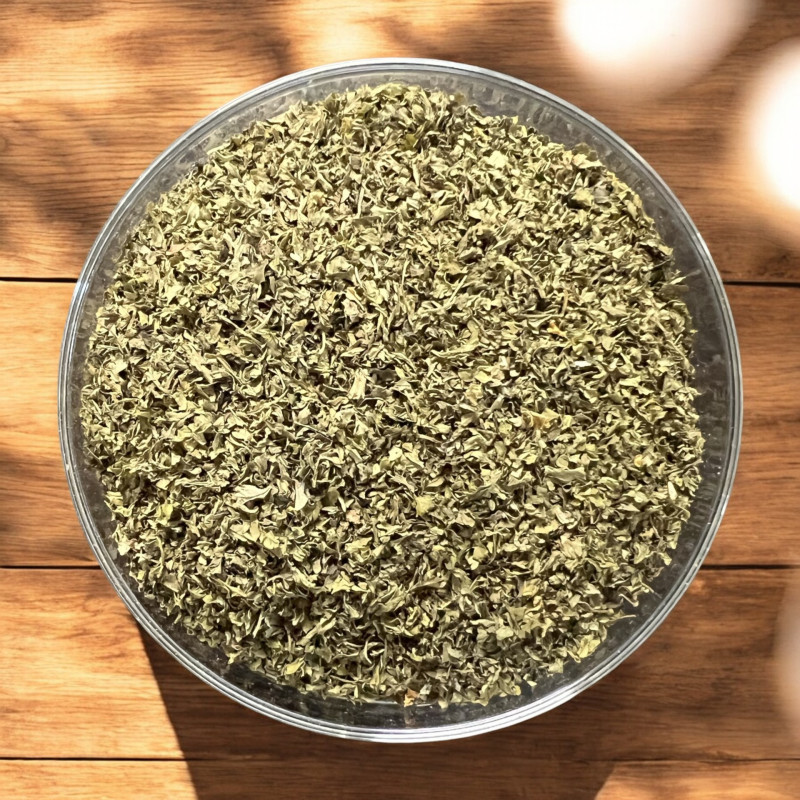
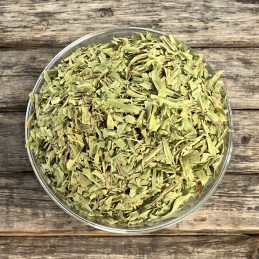
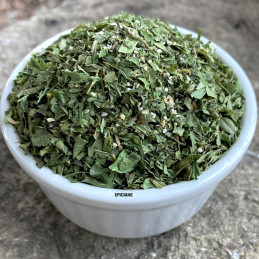
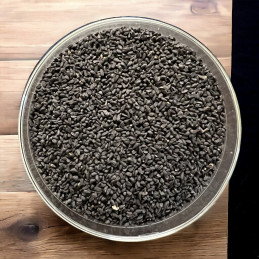
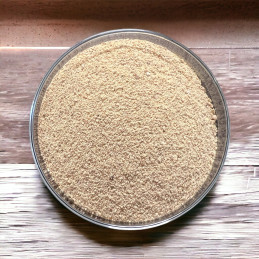
Delivered in a resealable bag
- Origin France -
- Non-GMO, Non-irradiated -
Culinary Uses:
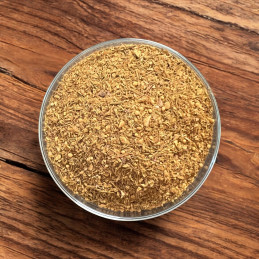
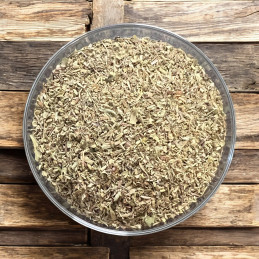
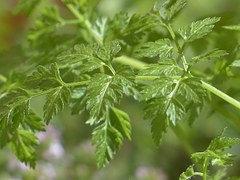 Chervil is part of the "fines herbes" blend, alongside parsley, chives, and tarragon. It has a subtly aniseed and very delicate flavor.
In cooking, it is best to rehydrate it for a few minutes in a small amount of water, as with all dried herbs, before adding it to a vinaigrette. This makes it as tender as fresh and prevents it from absorbing the vinegar in the dressing. Chervil adds a delightful flavor to a variety of dishes and sauces, such as béarnaise, gribiche, and cream sauces, as well as vinaigrettes, soups, salads, omelets, and even fish.
In herbal medicine, a chervil mask is said to purify and soften the skin. Applied to the eyelids, it refreshes tired eyes.

What is it?
Origin: France
Scientific Name: Anthriscus cerefolium
Common Names: Garden chervil, fine parsley
 There are two main varieties of chervil: the common chervil, offered here, and curly chervil, which is slightly less flavorful.
Chervil is a biennial herbaceous plant from the Apiaceae family, growing 30 to 60 cm tall. It is cultivated for its tender, light green, finely divided leaves with a subtle, slightly aniseed flavor. It resembles parsley but has finer leaves and a more aniseed aroma. Its delicate white flower umbels bloom in early summer.
Avoid picking wild chervil, as it can be easily confused with toxic plants like hemlock, despite their distinct odors!
Chervil has a remarkably high content of iron, calcium, and vitamins, particularly vitamins C, A, and B9.
It thrives in light, fresh, and loose soil with partial shade. It is generally resistant to diseases and pests, except for aphids.
°°°
History:
Likely originating from southern Russia and the Caucasus, chervil was well known to the ancient Greeks.
It has been cultivated in France since the Middle Ages, having been brought back from the Crusades. At the time, it was primarily used in medicine.
***